Guide
How to fix squeaky floorboards
Most squeaks come from a board moving on a loose nail or rubbing against its neighbour or the joist. Screwing the board down into the joist fixes most of them, once you have checked for pipes and cables underneath.
Why floorboards squeak
A squeak is two pieces of timber, or timber and a nail, moving against each other under load. Find what is moving and you have found the fix. These are the usual causes, roughly in order of how often they turn up.
- A loose nail. As boards and joists dry and shrink, nails lose their grip and the board rides up and down the shank. Floors nailed decades ago are the classic case.
- Boards rubbing together. Tongue-and-groove boards, and square-edged boards laid tight, squeak where the edges rub as one board flexes and its neighbour does not.
- A gap over the joist. If a joist has shrunk, twisted or dipped, the board spans fresh air above it and drops onto the joist each time it is trodden on.
- Too little bracing. Joists without strutting or noggins between them flex more, and the whole floor moves.
- Chipboard sheets. Sheet floors squeak at unglued tongue joints and where the screws or nails into the joists have worked loose.
Squeaks are often worse in winter. Central heating dries the timber, it shrinks, and nails that held in summer lose their grip.
Find the squeak first
Walk the floor slowly and mark each squeak with a strip of masking tape. Rows of nail heads show where the joists run, usually at 400mm or so apart and at right angles to the boards. Where you can get underneath, in a cellar or through an open ceiling, have someone walk the floor while you watch and listen; a board lifting off a joist is easy to see from below.
If the squeak is in one spot, it is almost always the board. If the whole room creaks and bounces, look at the joists before blaming the boards.
Check for pipes and cables before you drill
Heating pipes, water pipes and cables run under floors, often in notches cut into the tops of the joists just below the boards. A screw driven through a board into a pipe floods a ceiling; one through a cable is dangerous. Before fixing anything:
- Use a pipe and cable detector along the line of each joist.
- Look for boards that are already screwed rather than nailed. They are often access boards over pipes or junction boxes.
- Where in doubt, lift one board along the run and look.
- Use screws no longer than the job needs.
If you find gas pipework where you meant to fix, stop and fix elsewhere.
The fixes
Most squeaks need only the first of these. Work through them in order.
- Screw the board to the joist. Drill a pilot hole and countersink it, then drive a wood screw into the centre of the joist. For a typical 19mm to 22mm board, a 50mm screw is about right. Screws pull the board tighter than nails and hold it there, and near the board ends a pilot hole stops the timber splitting.
- Lubricate rubbing edges. Where boards rub against each other rather than the joist, puffing talc or powdered graphite into the joint quietens it. It is a temporary fix that can last years.
- Pack the gap. Where a board sits above a dipped or twisted joist, a thin timber packer glued and pushed in from below, or a batten screwed to the side of the joist, gives the board something to sit on.
- Add bracing. Noggins or strutting fitted between joists from below stiffen a bouncy floor and stop the movement that sets the squeaks off.
- Screw down chipboard. Fix sheets to every joist at regular centres along the joist line, and glue any tongue joints that have opened if the sheets are being lifted anyway.
Under carpet, snap-off screw kits can be driven through the carpet into the joist and the head snapped below the pile. Under a floating laminate or engineered floor, the noise is often the floating floor itself or the sub-floor, and the fix usually means lifting part of it.
When it is more than a squeak
A squeak is a nuisance. Some floors are telling you something more. Call someone in if you find:
- A floor that is springy or dips when you stand in one spot.
- Cracks in the ceiling below that open and close as people walk across.
- Joists notched deeply or cut through to run pipes.
- Damp, soft or crumbling timber on a ground floor, especially where airbricks are blocked. Ground-floor suspended floors need air moving under them, and without it joists and boards rot.
- Small round holes and fine dust, which suggest woodworm.
These are repair jobs: replacing rotten boards or joist ends, sistering a weak joist with a new length bolted alongside it, or strengthening a joist notched for pipework. A carpenter will usually lift boards to look before pricing, because the cause decides the cost.
What it costs to have someone fix it
Fixing squeaks across a room or two is a small job, usually done on an hourly or day rate: most carpenters charge £30 to £90 an hour or £200 to £350 a day, often with a minimum charge. Lifting and relaying old boards, or laying new ones, is priced as flooring work at around £20 to £45 per square metre in labour. If you are planning to sand and refinish the floor, fix the squeaks first, because screws need countersinking and filling before the sander goes over them.
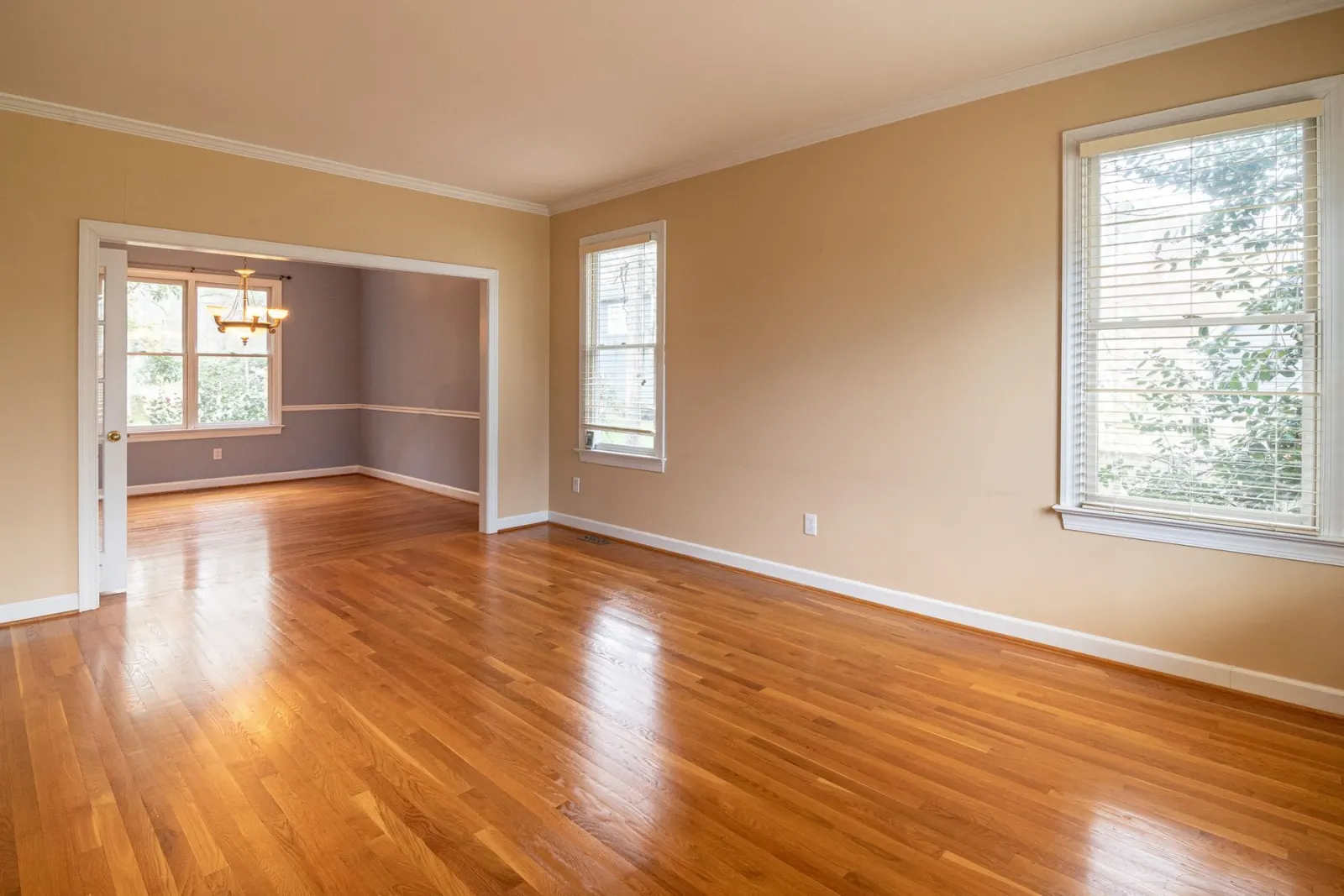
Old boards that run across the joists, where most squeaks start.
Common questions
Should I use nails or screws to stop a floorboard squeaking?
Screws. Nails are what worked loose in the first place. If you must nail, ring-shank nails hold far better than plain ones.
Can I fix squeaky floorboards without lifting the carpet?
Often, yes, with a snap-off screw kit driven through the carpet into the joist. Find the joist first and check for pipes and cables along its line.
Will the squeak come back?
A board screwed properly into the centre of a joist rarely squeaks again. Squeaks that return usually mean the screw missed the joist or the real movement is in the joists themselves.
Why do my floors creak more in winter?
Heating dries the timber and it shrinks, loosening nails and opening gaps. Many floors go quieter again as the house takes up moisture in spring.